The Science of Looking Younger

Can you reallylook 40 at 60?

An evidence-first investigation into what actually slows how you age — and the myths that quietly take your money. Every claim graded Strong, Promising, or Weak.

Scroll to investigate ↓

The Investigation

Why does one 60-year-old look 40 — and the next look 75?

A face goes viral for the wrong reason

The mystery

A face goes viral for the wrong reason

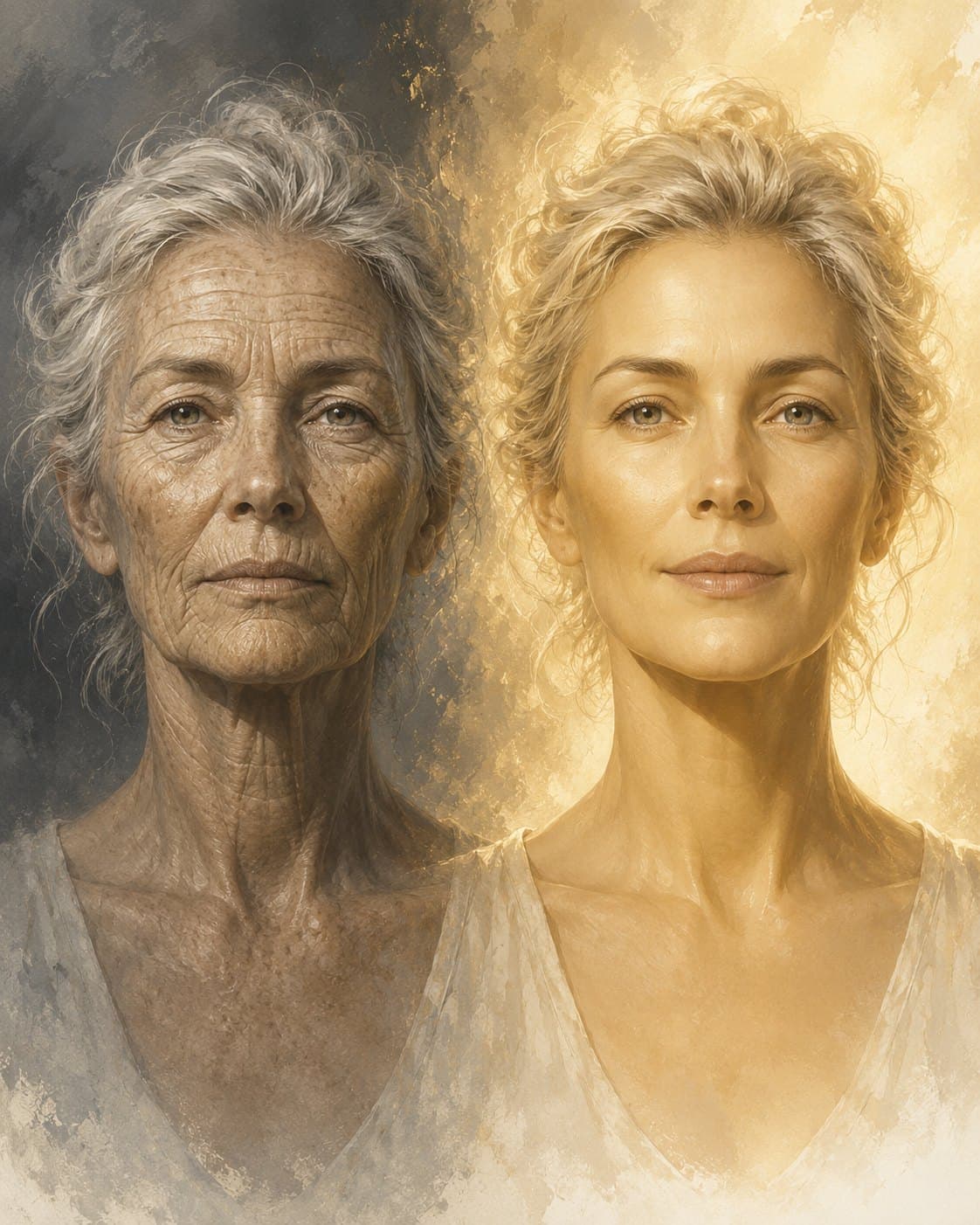
Every few months a photo detonates online: someone who looks impossibly young for their age. The comments split into two camps within minutes — “genetics, obviously” and “it’s all discipline.” Both can’t be right. So which is it?

You’re only seeing the survivors

The trap

You’re only seeing the survivors

In WWII, engineers wanted to armor the bullet holes on returning bombers — until a statistician pointed out the planes that didn’t come back. We do the same with aging: we study the photogenic outliers and miss everyone the same routine didn’t save. The viral face is a survivor, not a recipe.

Aging is partly in your hands

The answer

Aging is partly in your hands

Twin studies put the genetic share of how you age at roughly half — leaving the other half to things you actually influence. Not a magic gene. Not pure willpower. A negotiable middle the cosmetics industry would rather you didn’t notice.

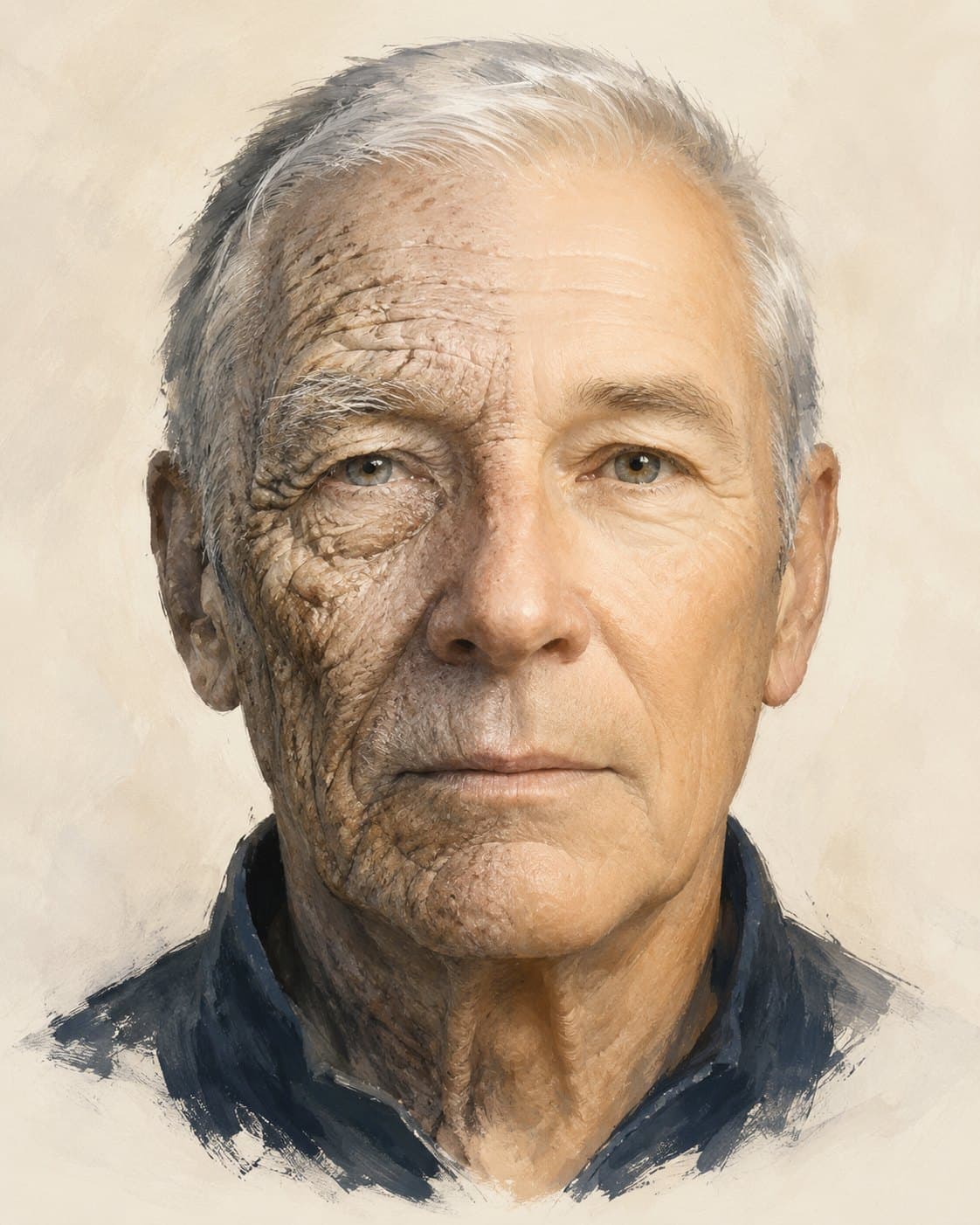
One side of a face shows decades of sun damage the other was shielded from.

The Science, Made Visible

Watch skin age at the cellular level

Skin age 25

01

A scaffold of collagen holds your skin taut

Healthy skin is a dense, springy lattice of collagen and elastin. At 25 it’s woven tight. This is what “young” actually is, structurally — not a glow, a scaffold.

02

Ultraviolet light cleaves the fibers

Every unprotected hour outdoors, UV radiation snaps collagen strands and switches on enzymes that dissolve more. The damage is invisible for years — and then it isn’t.

03

The scaffold collapses — and the face follows

Up to ~80% of visible facial aging is photoaging: sun damage, not candles on a cake. The single highest-leverage thing you can do for how you look at 60 is the most boring. Wear sunscreen.

The Anti-Aging Report Card

Every intervention, graded on evidence — not marketing

The Strong column is almost entirely free. The Weak column is almost entirely for sale. Here's a preview of the 28-row scorecard — the full, sourced version is Chapter 13.

Strong

12

Solid human evidence, often randomized trials. Do these.

  • Daily broad-spectrum sun protection

    The #1 driver of how old your face looks

  • Not smoking

    Sabotages nearly every aging pathway at once

  • Resistance / strength training

    Defends muscle; strength predicts mortality

+9more, graded & sourced — in the book

Promising

8

Real but limited, mixed, or early evidence. Reasonable, with modest expectations.

  • Cutting added sugar

    Less glycation; steadier blood sugar

  • Finishing meals 2–3 h before bed

    Less reflux, better glucose & sleep

  • Moderate calorie restriction

    Small, real slowing of aging markers

+5more, graded & sourced — in the book

Weak or Overhyped

8

Little, no, or contradicted human evidence. Save your money.

  • Antioxidant supplements (high-dose)

    Failed in trials; some raised mortality

  • Collagen creams

    Molecule can't penetrate skin

  • "Anti-glycation" / sugar-detox pills

    Real biology, no proven product

+5more, graded & sourced — in the book

“The things that most reliably keep you looking young are mostly free, mostly dull, and mostly within your control.”

The book ties every grade to the studies behind it. This scorecard is educational, not medical advice.

Read it

Own the book outright

Buy direct and get the EPUB + PDF bundle — no platform lock-in, readable on any device, yours to keep.

$9.99EPUB + PDF · instant download
Look 40 at 60 cover

Free · 2 minutes

What’s your Youthful Aging Score?

Answer a handful of honest questions and see how your habits stack up against the evidence — and exactly where your highest-leverage changes are.

10 quick questions · no account needed

Who wrote this

Takahiko Sho

Not a doctor — a researcher who got tired of being sold to, and spent years cross-checking the bestseller wellness shelf against the actual studies. The rule of this book is simple: every claim shows its work. You shouldn’t have to take anyone’s word for how you age — including mine.